

Time to first valueScoped quick win
Timing confirmed after discovery
Chatoner AI Systems helps organizations identify practical AI opportunities through AI Strategy & Consultancy, then design and implement Custom AI Systems, AI Automation & Workflows, AI Digital Workers, Custom AI Agents, and AI Governance, Risk & Operations for the client’s approved environment, data, tools, permissions, and human owners.
Timing confirmed after discovery
Approval and escalation boundaries
Errors, health, and recovery
Plain language and measurable value
Chatoner develops and implements these systems for clients; deployment, data ownership, operating responsibility, and ongoing support are defined by the agreed client scope.
AI Co-founder and Enterprise AI are pathways inside Chatoner AI Systems—not new platforms, company-size plans, or extra capabilities. Both can use the six Systems capabilities when the work requires them.

Bring an idea, MVP, existing product, or materially new initiative. Choose Chatoner-led delivery or build hands-on through independent Chatoner AI Labs.

Identify, design, deploy, govern, and improve client-specific AI systems around approved existing work.
Not sure? Start with the work you need to change. Discovery can move an initiative to the better-fit pathway without losing its history.
The value is not technical novelty. It is clearer ownership, faster follow-through, safer operations, and evidence leaders can review.
Demand waits across disconnected inboxes
People copy approved information between tools
Follow-through depends on memory
Leaders chase updates manually
Customers repeat information at every handoff
Automation fails without a recovery owner
AI Strategy & Consultancy defines the opportunity first. Chatoner then recommends the smallest credible combination of systems, workflows, digital workers, agents, or governance support—whether the pathway begins with something new or established work.

Assess goals, workflows, data, tools, risks, readiness, and expected value before deciding what should be improved, automated, built, or left unchanged.
Plan the opportunity
Design and implement connected AI systems around the client’s approved processes, tools, data, integrations, permissions, owners, and operating outcomes.
See system examples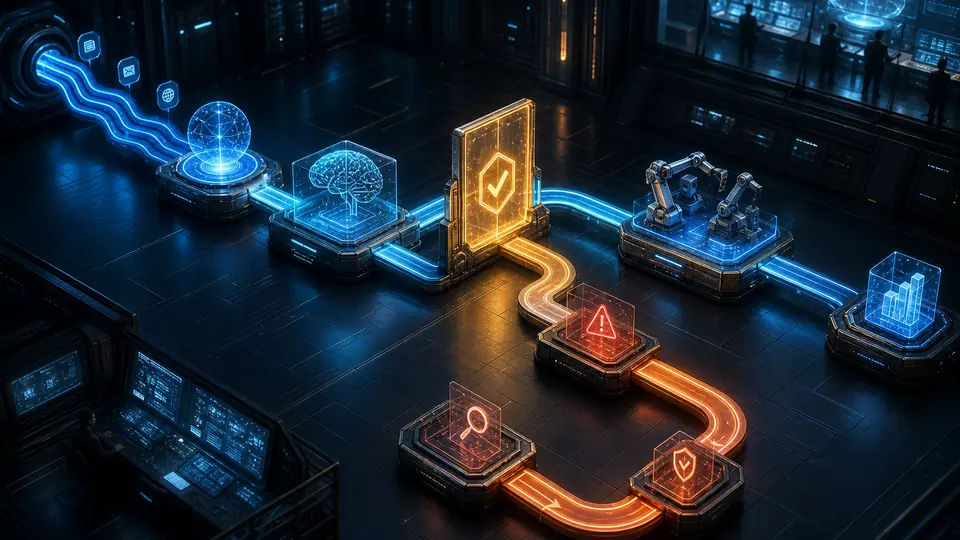
Turn repeatable processes into governed workflows with clear triggers, rules, approvals, exceptions, escalation, monitoring, and recovery paths.
Explore workflow solutions
Develop role-based AI workers that support defined operational responsibilities using approved knowledge, tools, procedures, and human boundaries.
Explore digital workers
Build purpose-specific agents that interpret context and take approved actions within defined responsibilities, permissions, tools, knowledge, escalation, and review limits.
Review the Agent lifecycle
Establish ownership, human approval, access controls, monitoring, incident review, auditability, evaluation, change management, and responsible deployment practices.
Review governance controlsStart with a concise example, then open only the technical or applied detail relevant to the decision.
Capture, classify, respond, book, route, and log inbound demand.
Acknowledge missed calls, collect context, route urgency, and offer the next step.
Track open quotes, send approved follow-up, stop on reply, and surface priority opportunities.
Extract data, update approved records, create tasks, draft communications, and prepare reports.
Ground answers in approved procedures, pricing, policies, product data, and internal knowledge.
Show response, follow-up, system health, errors, hours saved, and recommendations.
Design meeting and call intelligence around the client’s approved meeting environment, permissions, notice, consent requirements, and workflows.
Support the human seller before, during, and after an interaction without presenting the AI as an autonomous commercial representative.
Help teams define target accounts, enrich approved signals, identify timing, plan outreach, monitor responses, and route qualified opportunities.
Chatoner AI Conversations owns Messages, Meetings through Chatoner Meet, Sales Conversation Insights, consent, routing, and human handoff. AI Systems may integrate with a client-selected CRM or other approved system within the agreed implementation scope; it operates alongside that system and does not host or own the client’s CRM.
Each stage keeps the owner, operating boundary, evidence, and release decision visible. Capability can increase without removing human responsibility.
Define the agent’s role, approved knowledge, data, instructions, tools, model policy, voice, actions, guardrails, owner, and escalation path.
Run realistic scenarios and validate accuracy, brand consistency, tool use, security boundaries, escalation behavior, and edge cases before deployment.
Release the approved agent into the client’s selected environment, channels, tools, and workflows with permissions, ownership, monitoring, logging, and handoff responsibilities defined.
Review quality, feedback, escalation patterns, unresolved themes, operational outcomes, and safety signals, then improve instructions, tools, procedures, and guardrails through an approved change process.
Move from a clearly defined operating problem to a governed system that is deployed responsibly, documented for its owners, and improved through evidence.
Map the real work, owners, data, tools, friction, risk, volume, and baseline.
Define triggers, logic, permissions, approvals, exceptions, recovery, and acceptance criteria.
Build, test normal and edge cases, stage the release, launch, and monitor.
Deliver diagrams, procedures, limits, access notes, training, and recovery guidance.
Review performance, resolve incidents, report value, improve safely, and choose what comes next.
A completed build should show what was approved, how it was tested, who operates it, how it can be stopped or recovered, and what support remains in scope.
Purpose, scope, owners, triggers, approved data and tools, human decisions, exceptions, and recovery paths.
Scenario results, permission checks, defects, acceptance criteria, approvals, and the documented release decision.
Runbooks, monitoring guidance, escalation, safe-stop, recovery, configuration notes, and controlled change procedures.
Client operating responsibilities, Chatoner deliverables, and any maintenance, optimization, or support included in scope.
Chatoner AI Systems is the operational build layer inside a wider ecosystem. It does not replace the customer conversation layer or the learning layer.
Own customer messages, meetings, consent, routing, human handoff, and conversation insights.
Turn approved signals and operating needs into governed workflows, systems, workers, and agents.
Build the practical capability people need to use, review, operate, and improve AI-supported work.
Keep outcomes, approvals, incidents, credentials, and improvement records reviewable.
Governance keeps purpose, ownership, permissions, approval, consent, evidence, incident response, recovery, change, and support responsibilities visible.
Use transparent assumptions, honest evidence labels, and client-approved reporting. Illustrative scenarios remain clearly separated from verified client results.
Challenge every assumption before deciding whether a build is justified.
Use the ROI calculatorReview how real case evidence is separated from demonstration scenarios.
Open case studiesUse the AI Operations Audit Checklist to score process friction, data readiness, ownership, risk, review boundaries, and measurable success.
Bring the workflow, current tools, available data, risk, and outcome you want to improve. Chatoner will help determine whether the right path is strategy, automation, a Custom AI System, an AI Digital Worker, a Custom AI Agent, or governance support.
